
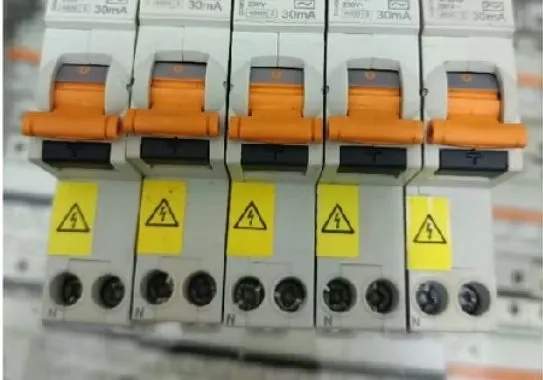
Multymeter.com-Electrical Engineering: Continuing the article about the benefits of RCBO (Residual Current Breaker with Overcurrent), now we will discuss how to choose an RCBO that suits your needs, namely matching the RCBO current rating (amperes) with the electrical load, and the leakage current sensitivity as needed. For private homes, usually using 30mA, type A or AC curve. And the most important thing is to choose a product that has been certified by standards such as IEC / UL for optimal safety from short circuits and electric shocks.
Here are detailed tips for choosing an RCBO:
• Type AC: Suitable for simple resistive loads (incandescent lamps, heaters).
• Type A: Type Ais suitable for lower currents. • Type B: Type B for moderate overcurrent, needed for solar power generation (PV) systems, EV chargers, or industrial machines. • Type C: Type C for higher currents. Needed for modern appliances with electronic components (inverters, air conditioners, washing machines, computers, LED lights).
• Choose an RCBO with sufficient breaking capacity to handle the maximum short-circuit current at the location (e.g., 4.5kA, 6kA, or 10kA).
• Consider Pole Features: A 2-pole RCBO (breaking both phase and neutral) provides better safety than a 1-pole, especially in the event of a neutral fault. Use products that meet international standards (IEC) to ensure quality and safety.
How to Choose a Good RCBO for Electrical Installations:
1. Calculate Electrical Power The maximum electrical power that will be passed by the RCBO is very important to calculate before installing this device. Make sure the RCBO has a rating that matches the system needs to provide optimal protection.
2. Pay Attention to Residual Current Sensitivity Pay attention to the residual current sensitivity that the RCBO can detect. Choose a sensitivity that suits the usage environment, considering that high sensitivity can detect smaller residual current leaks.
3. Choose the Right RCBO Class Choose the right RCBO class.
4. Consider Additional Features Choose an RCBO that has additional features, such as overcurrent protection capabilities and a physical design that makes installation easier. 5. Adjust RCBO Specifications to the Environment Finally, adjust the RCBO to the needs of the installation environment, such as environmental conditions, temperature, and humidity.
This is done to provide maximum protection and maintain installation reliability if the area to be installed requires special attention. Choose the Right Sensitivity (Rating) For human protection from electric shock, use 30mASensitivity. And for 100mA – 300mA sensitivity, it is used for fire protection or industrial loads. Adjust the Current Rating (Ampere) to the Load: Adjust the ampere rating, for example: 6A, 10A, 16A,20A, 25A, 32A with the total conductor load.
Type: Type A is safer for electronic/inverter loads, or Type AC (standard).
Breaking Capacity: Minimum 6kA (6000 Amperes) for residential safety.
Installation: Choose RCBO 1P + N (single phase + neutral) for higher safety and efficiency.
Mistakes to Avoid:Using an AC-type RCBO for sensitive electronic devices or computers. Ignoring the total electrical load, which can cause the RCBO to trip frequently or even burn out. Mixing different brands of RCBO/MCB in one panel.
RCBO combines the functions of an MCB (overload & short circuit) and an ELCB/RCCB (leakage current) in one unit, making it very practical for limited home electrical panels. Ensure the product is SNI certified or meets international standards.***